Why red flags matter more than reviews
Reviews of research-chemical vendors are close to worthless. They cannot say whether the vial contained what the label said, because the reviewer had no way to measure it. They can be bought, and on this market they often are.
What a buyer can judge from a page is whether the vendor has built the machinery to prove its claims: testing, lot control, a legal entity, a research-use frame. The absence of that machinery is visible, and it is what the flags below detect.
The reason to be strict is in the published record. When researchers bought semaglutide from online sellers offering it without a prescription, half of the orders never arrived and the rest failed visual inspection, measured 7.7 % to 14.4 % pure against a labelled 99 %, and contained endotoxin at 2.16 to 8.95 EU per milligram[1].
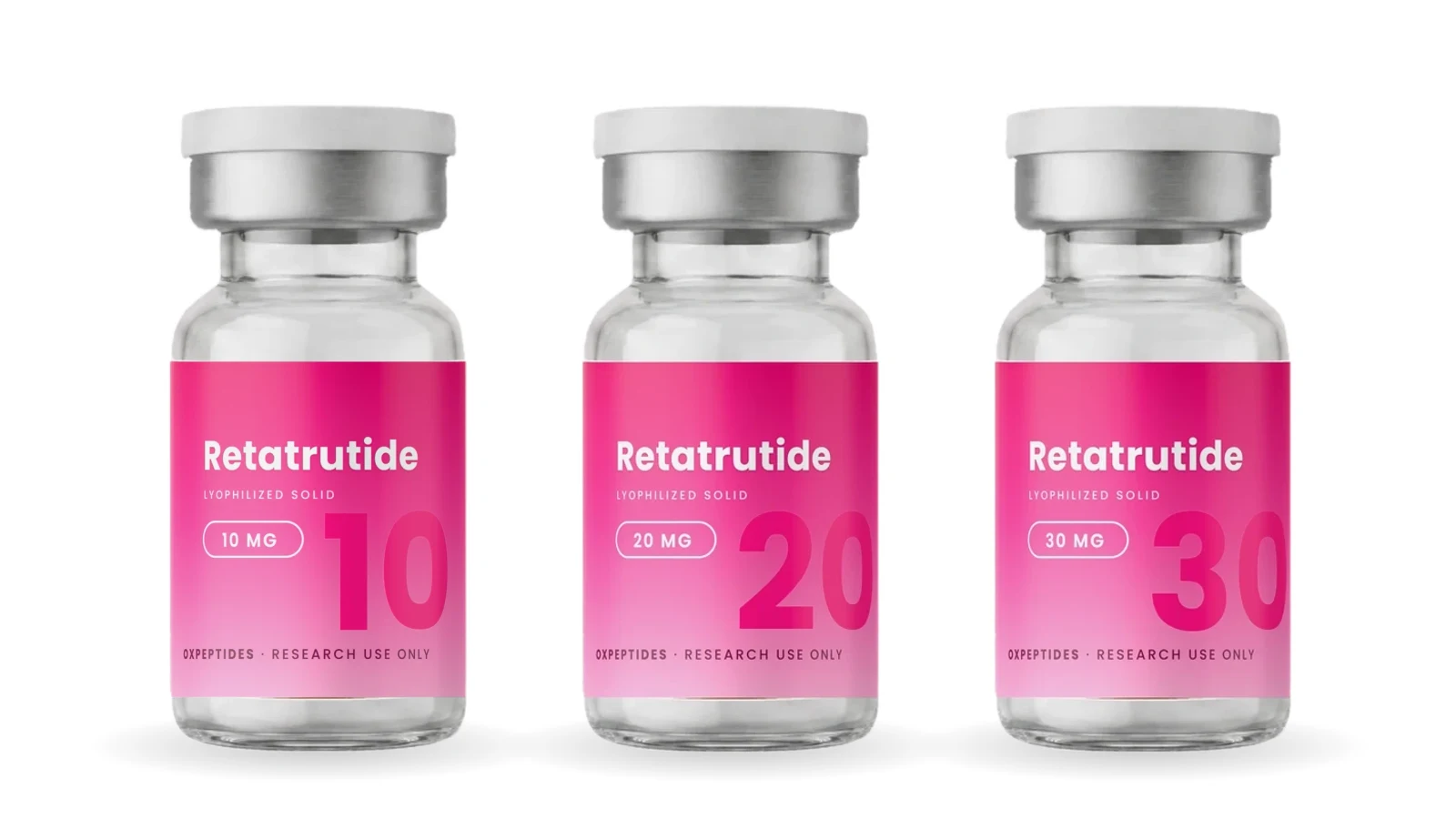
When an accredited laboratory analysed three products sold as retatrutide in 2026, all were genuine and all were wrong: 5.13 mg, 16.5 mg and 19.0 mg in vials labelled 10 mg[2]. Neither failure mode is visible to a reviewer.
Retatrutide is investigational, with phase 3 obesity trials completed in 2026[3] and no approval from the FDA or the EMA. Everything online is a research chemical or a misrepresented one. The flags separate those two.
Key numbers
Flags 1 to 6: the certificate
- No certificate at all. A purity number in the product title and nothing behind it. Treat the number as decoration.
- Certificate without a lot number, or with a lot number that is not on the vial. The tested material and the shipped material are not linked. This is the most common failure on otherwise professional-looking pages.
- Unnamed laboratory. A certificate with no laboratory name, address or report number cannot be verified with anyone. A vendor letterhead is a self-declaration.
- One chromatogram for every product. The same trace image reused across retatrutide, other peptides and months of lots. Real traces differ lot to lot and have baseline noise. See HPLC purity explained.
- Purity only. No identity by mass spectrometry, no net content in milligrams, no endotoxin. Purity is one test, and it is the one that would not have caught the 51 % to 190 % content spread[2].
- Certificate older than a year, or undated. A report describes the lot on the day it was tested. Storage since then is the vendor's responsibility, and an old report is a hint that lots are not being retested.
The full explanation of each line, and the two questions to ask a vendor, are in how to read a retatrutide COA.
All purchased vials were considered probable substandard and falsified products.
Figure 2
Flags 7 to 12: the seller
- Weight-loss language. Any mention of fat loss, appetite, dosing schedules, cycles or results in people. It contradicts research use only and marks the seller as selling an unapproved drug. The research-use article explains why the two cannot coexist.
- Testimonials and star ratings about effects. Nobody can review a research chemical's effect without breaking the label. Reviews about shipping speed are one thing; reviews about results are a flag.
- No legal entity. No company name, registration number or physical address anywhere on the site. A support address on a free webmail domain rather than the vendor's own.
- Crypto or wire only. Card processing requires a merchant account and a real business behind it. A seller that cannot get one, or refuses one, has removed the buyer's only recourse.
- Ranking articles that name the seller as number one. Best retatrutide source lists are published by the vendors they rank or by affiliates paid per click. A page that ranks itself is advertising.
- Prices far below documented vendors. Third-party testing per lot, a registered company, payment processing and tracked shipping cost money. A price that does not cover them is a price for something else.
Two or three of these on one page are enough. A seller with most of them is the grey market with a website, which is the case described in grey market versus research vendors.
What a clean vendor page looks like
The opposite of the twelve flags is not a beautiful website. It is a boring one that answers questions with documents. The product page states the compound, the vial size and the lot number. The certificate is one click away, carries the same lot number, names a third-party laboratory with a report number, and reports HPLC purity with a chromatogram, mass spectrometry identity, net content in milligrams and, in the best case, an endotoxin value.
The page says research use only and says nothing about people. The footer names a registered company with an address and a support address on the vendor's own domain. Payment is by card. Shipping is tracked.
That is a description, not an endorsement of any one vendor, and it is the standard this site applies in its guide to where retatrutide is sold.
OXpeptides (https://oxpeptides.com) is one vendor we can point to that publishes an third-party laboratory certificate per batch, labels for research use only and operates as a registered company; the checklist above applies to its pages as to anyone's, and the reader should run it rather than take our word.
What a clean page cannot do is turn a research chemical into a medicine. Retatrutide reaches patients only through a Lilly trial or the expanded access program registered in June 2026[4]. A clean vendor page is for laboratories. The routes for patients are a different article.
The three-minute check
- Open the certificate. Lot number on it? Laboratory named? Report number? Date within a year?
- Read the certificate. HPLC with a trace, mass spec, net content, endotoxin?
- Read the page. Any word about weight loss, dosing or results in people?
- Read the footer. Company name, address, support address on the vendor's domain?
- Check the payment step. Card accepted?
Five checks, three minutes, and most of the retatrutide online market fails the first one. The vendors that pass are the only ones worth comparing on price, and even then the comparison is between lots, not between logos. A JAMA viewpoint in 2026 called the current state of injectable peptide supply a regulatory gap[5]; until that changes, the checks above are the regulation.
Questions readers ask
How do I know if a retatrutide vendor is legit?
Open the certificate of analysis. It should carry the lot number on the vial, name a third-party laboratory with a report number, and report purity, identity, net content and ideally endotoxin. Then check that the page makes no claims about effects in people and that a registered company stands behind it.
Are retatrutide vendor rankings trustworthy?
Generally not. Best-source lists are published by vendors or affiliates paid per click. This site does not rank vendors; it gives a checklist and names one example of documented practice.
Why is crypto-only payment a red flag?
Card processing requires a merchant account, which requires a real business. A seller that cannot or will not accept cards has removed your only route to a chargeback if nothing arrives. In a 2024 study, half of online GLP-1 orders never arrived (DOI 10.2196/65440).
What if the vendor has great reviews?
Reviews cannot report what was in the vial, because reviewers have no way to measure it, and reviews about effects in people contradict the research-use label. Judge the certificate, not the stars.