Why the molecule is not the difference
Retatrutide, the Lilly triple agonist coded LY3437943, is a synthetic peptide. Any competent peptide manufacturer can make it once the sequence is public, and the sequence has been public since the pharmacology paper in 2022[1].
This is why the same molecule shows up in a Lilly phase 3 trial, on a research vendor's website, and in a direct message from an anonymous seller. The chemistry does not distinguish these sources. The paperwork does.
The evidence that paperwork matters is thin but pointed. In 2026, three products sold as retatrutide in Australia were analysed by an accredited laboratory. All three contained retatrutide of the correct molecular weight.
They contained 5.13 mg, 16.5 mg and 19.0 mg in vials labelled 10 mg[2]. Nothing about the powder told the buyer which vial they had. Only a per-lot certificate with net content would have.
The wider peptide market has the same shape. A JAMA viewpoint in July 2026 described synthetic injectable peptides as a growing category of enhancement drug use that sits in a regulatory gap between medicines and illicit drugs, with supply moving through online vendors and informal networks[3].
Another JAMA report the month before noted that FDA policy was moving toward greater availability of unapproved peptides for which safety and efficacy evidence is limited[4]. In that environment, the buyer is the only quality inspector left.
Key numbers
What a research vendor can show you
A research vendor sells retatrutide as a laboratory chemical, labelled for research use only and not for human consumption. The label is not a formality: it is the legal basis on which the sale exists, and a seller who contradicts it in marketing is undermining their own position. What separates a serious research vendor from the rest is what it can produce on request.
- A certificate of analysis per batch from a named third-party laboratory, with a report number. See how to read a retatrutide COA.
- HPLC purity with a chromatogram, and identity by mass spectrometry.
- Net content in milligrams and, ideally, an endotoxin value in EU per milligram.
- A registered legal entity with a company number, a physical address and a support address on its own domain.
- A research-use policy that states what the product is and is not, and that refuses medical questions.
- Lot numbers on the vial label that match the certificate.
- Card payment through a processor, tracked shipping, and a written refund policy.
Not every research vendor ticks every box. Endotoxin testing in particular is uncommon. But a vendor that ticks most of them has made itself accountable in ways a grey-market seller structurally cannot.
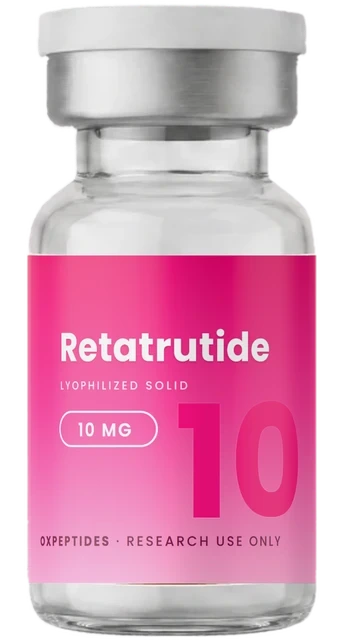
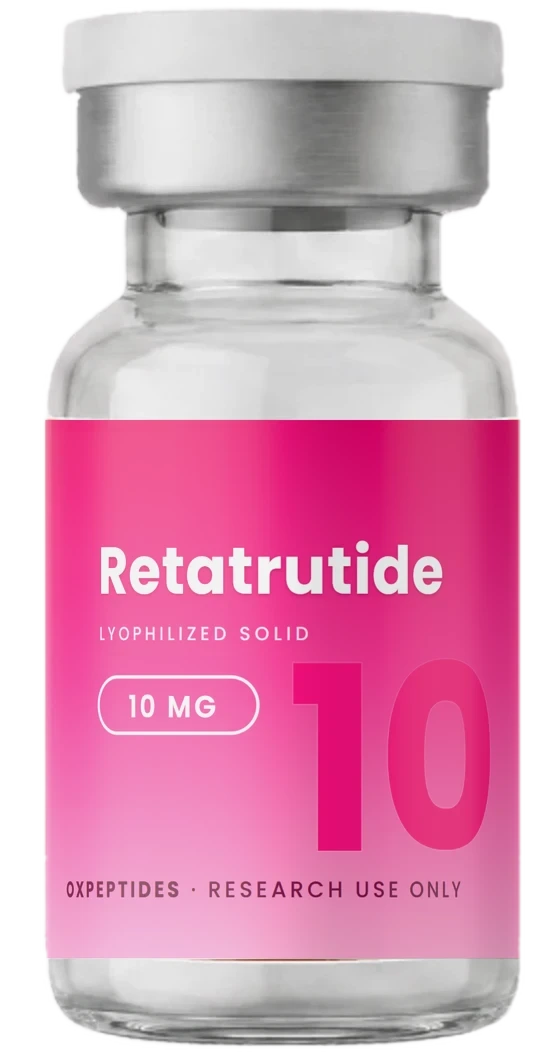
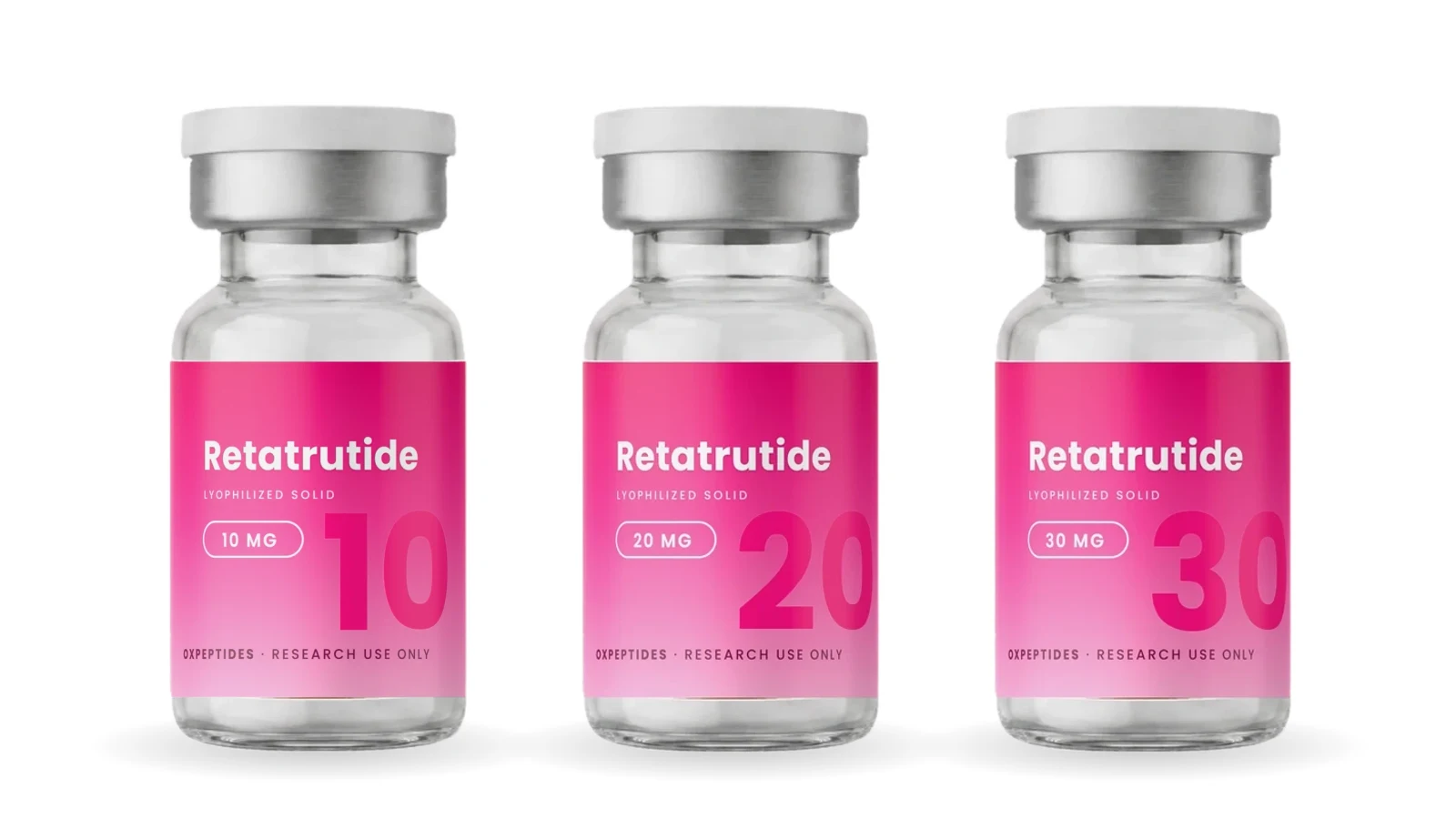
OXpeptides (https://oxpeptides.com) is one vendor we can name that publishes an third-party laboratory certificate per batch and labels every vial for research use only; it is listed here as an example of the category, not as a ranking.
This Viewpoint discusses the growing presence of synthetic peptides in enhancement drug use and outlines regulatory gaps created by the blurring of boundaries between medicine and illicit use.
Figure 1
What the grey market looks like
The retatrutide grey market is the set of sellers who offer the compound without any of the above. They advertise in social media comments, on messaging apps, in forum private messages and on marketplaces that have no product pages. Payment is by wire, cryptocurrency or a payment app to a personal account.
There is no company, no address, no certificate tied to a lot, and no label that says research use only. Often the seller explicitly markets the product for weight loss, which is both a legal exposure and a signal that they have no quality process at all.
The published evidence about this end of the market comes from test purchases. When researchers ordered semaglutide from six online sellers that offered it without a prescription, three orders never arrived, and the three that did contained endotoxin at 2.16 to 8.95 EU per milligram and measured 7.7 % to 14.4 % pure against a labelled 99 %[5].
A 2026 case report described a man with type 1 diabetes admitted with severe vomiting, ketonaemia and acute kidney injury shortly after using an online-purchased product marketed as retatrutide, with the authors unable to establish what the product contained[6]. Whatever else is true about those cases, no certificate existed to check.
The grey market is not a cheaper version of the research market. It is a different product: the same molecule, or possibly not, with the information stripped off. Anyone comparing prices between the two is comparing a number with a guess.
The sellers in between
Most of the confusion comes from sellers who look like research vendors and behave like the grey market. They have a website, a product page and a purity claim, but the certificate is a single image reused across products, the laboratory is unnamed, the lot number on the vial does not appear anywhere on the certificate, and the marketing copy talks about weight loss and dosing. This is the group that the online red flags article is written for.
Two quick tests sort them. First, ask for the certificate for the lot you will receive, and see whether one arrives with a laboratory name and report number.
Second, read the product page for the phrase research use only and for any language about human results; a seller cannot honestly claim both. A vendor that fails either test belongs with the grey market for practical purposes, whatever its website looks like.
Price is the last thing to look at, not the first. Retatrutide vial prices vary with size, with whether the vendor runs a full certificate, and with whether the vendor is a registered business paying for payment processing and shipping insurance. A price that is far below the range of documented vendors is usually a price for the molecule without the documentation, or for nothing at all.
Where both sit legally
Neither category sells a medicine. Retatrutide is investigational, with phase 3 obesity trials completed in 2026[7] and no approval from the FDA or the EMA. It cannot be prescribed, and compounding pharmacies cannot make it because it is not an approved drug and not on the FDA list of bulk substances permitted for compounding[8].
The only lawful ways to receive it as a patient are a Lilly clinical trial or, since June 2026, Lilly's single-patient expanded access program for adults with a BMI of 35 or more and two serious obesity-related complications, requested by a treating physician[9]. The legal status article goes through each of these.
A research vendor sells a chemical for laboratory use and stays inside that frame. A grey-market seller sells the same chemical for human use and stands outside it.
That distinction is what a buyer is actually choosing between, and it is the reason this site treats documentation as the deciding factor. The full checklist is in the guide to where retatrutide is sold.
Questions readers ask
What is the retatrutide grey market?
Sellers who offer retatrutide with no registered company, no per-batch certificate, no research-use labelling and no accountable payment channel, usually through social media, messaging apps or forums. The molecule may be genuine; nothing about the sale lets you check.
Is a research vendor legal?
Selling a peptide as a laboratory chemical, labelled research use only and not for human consumption, is how research vendors operate in the United States. That is a different legal object from a medicine. Retatrutide itself is not approved for human use anywhere.
How do I tell a real research vendor from a copycat?
Ask for the certificate for the lot you will receive, from a named third-party laboratory with a report number, and check whether the product page avoids human-use claims. A seller that fails either test should be treated as grey market.
Are cheaper retatrutide vendors a scam?
Not necessarily, but a price far below documented vendors usually means the documentation is missing. In a 2024 test-purchase study of online GLP-1 sellers, half the orders never arrived and the rest were substandard (DOI 10.2196/65440).