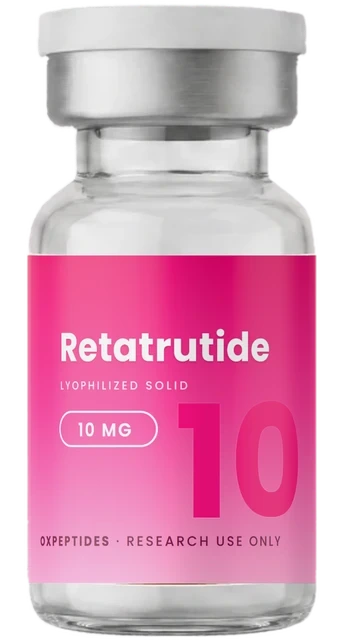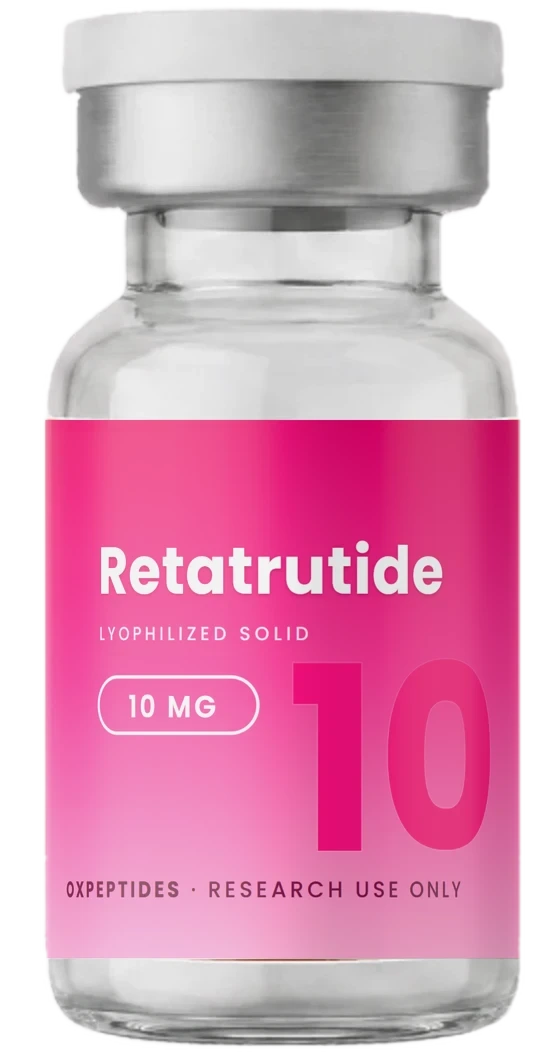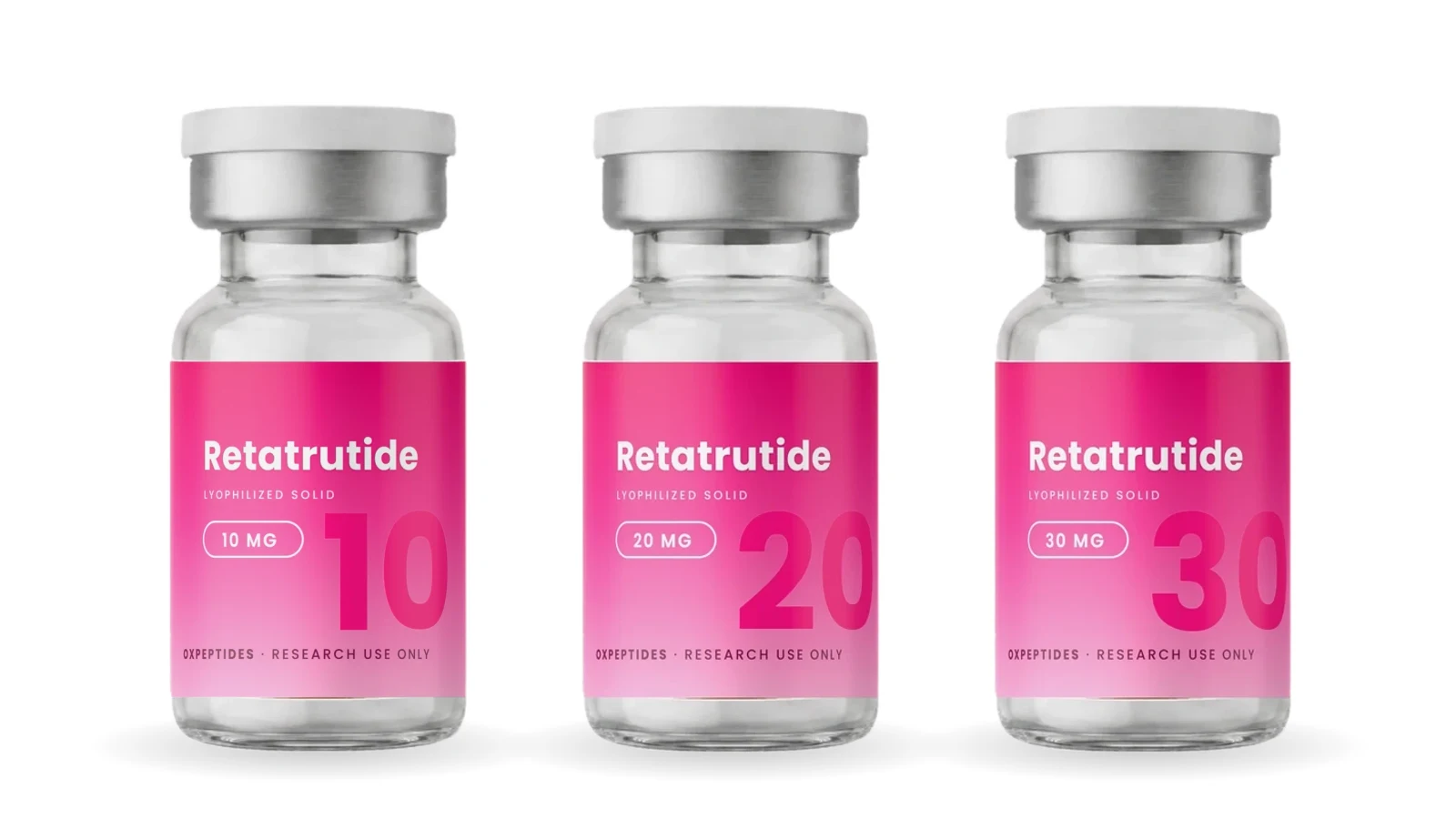
What a certificate of analysis is, and what it is not
A certificate of analysis is a report written by a laboratory after it has tested a specific batch of material. For a synthetic peptide such as retatrutide, the report should state what the material is, how pure it is, how much of it is present, and whether it carries contaminants that matter for a research sample. It is issued per lot. A COA that is not tied to a lot number is a brochure.
It is not a guarantee of safety, and it is not a licence. Retatrutide remains an investigational compound under phase 3 development by Eli Lilly, with completed registration trials in obesity, type 2 diabetes and cardiovascular disease[1][2], and it is not approved by the FDA or the EMA.
Everything sold outside a trial is sold as a research chemical. A COA tells you what is in the vial. It says nothing about what you may do with it. Read research use versus human use if that distinction is new to you.
The reason the document matters was made plain in 2026. Researchers at the University of Queensland analysed three products sold as retatrutide and labelled 10 mg. All three were genuine retatrutide by molecular weight.
One contained 5.13 mg, the second 16.5 mg, the third 19.0 mg[3]. Same label, a four-fold spread in content. None of those buyers had a COA that would have caught it, because a purity figure alone cannot catch it.
Key numbers
Figure 1
Line 1 and 2: identity and lot number
The first line names the compound. For retatrutide you want the name, the Lilly code LY3437943, and the expected molecular weight. The Australian analysis used 4730.477 Da as the reference mass and confirmed identity by molecular weight[3]. If the certificate lists a mass that is not close to 4730 Da, it is describing a different molecule, whatever the label says.
The second line is the lot or batch number. Take the vial out of the box and compare. A mismatch between the certificate and the label is the most common quiet failure in vendor listings: the vendor posts one certificate for a product page and ships lots that were never tested.
A vendor that tests per batch will be able to send you the certificate for the lot you are about to receive, with a report date within the last few months. Ask for it before you pay, not after.
The third element in this block is the laboratory. A third-party laboratory has a name, an address and a report number that you can quote back to it. A vendor letterhead with a purity figure and no laboratory named is a claim, not a test. Some vendors use the same handful of independent laboratories; that is fine, as long as the report number is real and the laboratory confirms it when asked.
Measured peptide content ranged from approximately half to almost double the labelled dose.
Line 3 and 4: HPLC purity and mass spectrometry
HPLC purity is the number everyone quotes. It is the area of the main peak on a reversed-phase HPLC chromatogram divided by the area of all peaks, expressed as a percentage.
Related substances in synthetic peptides come from the synthesis itself: deletion sequences where one amino acid is missing, truncated chains, incompletely removed protecting groups, oxidised residues[4]. A validated stability-indicating method separates these from the parent peptide so they can be quantified.
What is a good number? For a research-grade synthetic peptide of this length, 98 % and above is typical of a clean lot. 95 % is mediocre. Anything without a chromatogram image or at least a peak table is unverifiable. The full explanation, including what a purity figure cannot tell you, is in HPLC purity explained.
Mass spectrometry answers a different question: is the main peak actually retatrutide? An HPLC trace with a single dominant peak could in principle be a single dominant peak of something else.
LC-MS or MALDI-TOF reports an observed mass, which should sit within a fraction of a dalton of the expected value. Purity without identity is half an answer. Identity without purity is the other half.
Line 5: net content per vial, the number that failed
Net peptide content is the milligrams of retatrutide actually present in the vial. It is not the same as purity. A vial can be 99 % pure and contain 5 mg instead of 10, because purity describes the ratio of peptide to impurities, while content describes the absolute mass that was filled.
The Australian study measured exactly this and found 51.3 %, 165.0 % and 190.0 % of the labelled 10 mg[3]. The authors concluded that inaccurate dosing alone, without any adulteration, may represent an important source of risk in the unregulated peptide market.
Most vendor certificates do not report net content at all. When they do, the method is usually quantitative HPLC against a reference standard or a UV absorbance measurement, and the value should be stated in milligrams per vial with the lot number. If a vendor reports purity but not content, ask them why. The honest answer is that quantitation costs more. The dishonest answer is silence.
A related line is peptide content as a percentage of gross weight. Lyophilised peptides carry water and a counter-ion, usually trifluoroacetate (TFA) or acetate, and these can account for 10 % to 20 % of the powder mass.
A certificate that reports peptide content by weight, water by Karl Fischer titration and the counter-ion form lets you compute what is in the vial. A certificate that reports only purity lets you compute nothing.
Line 6: endotoxin, the line that is almost always missing
Bacterial endotoxins are lipopolysaccharide fragments from the cell walls of Gram-negative bacteria. They survive filtration and lyophilisation, they are heat-stable, and they are measured with the Limulus amebocyte lysate (LAL) test, expressed in endotoxin units (EU) per milligram or per vial[5]. The United States Pharmacopeia general chapter on bacterial endotoxins describes the reference method[6].
Here is why this line matters more than any other for a research sample handled in a laboratory. When a research group purchased semaglutide vials from online sellers and had them tested, every vial contained detectable endotoxin, between 2.16 and 8.95 EU per milligram, and measured purity was between 7.7 % and 14.4 % against a labelled 99 %[7].
The Australian retatrutide analysis did not test sterility or endotoxin at all and said so, listing it as an area for future work[3]. In other words, the one published analysis of retatrutide from informal supply did not measure the contaminant most likely to be present.
A vendor that reports endotoxin per batch is spending money on a test most of the market skips. That is a stronger signal than any marketing claim. If the line is absent, ask.
If the answer is that the product is not for human use so the test is unnecessary, note that the test is a quality-control measure for any peptide used in cell culture or animal work, and move on to a vendor that runs it.
The two questions to ask before you order
Everything above compresses into two questions for the vendor. First: can you send me the certificate for the exact lot I will receive, from a named third-party laboratory, with a report number I can verify? Second: does that certificate report net content and endotoxin, not just purity?
- Product name, LY3437943, expected mass near 4730.5 Da.
- Lot number matching the vial label, report dated within months.
- Named third-party laboratory with a report number.
- HPLC purity with a chromatogram or peak table.
- Mass spectrometry observed mass.
- Net content in mg per vial.
- Endotoxin in EU per mg or per vial.
- Water content and counter-ion form.
A vendor that answers both questions with documents rather than adjectives is in a different category from one that does not. That is the whole point of the comparison between grey-market sellers and research vendors, and it is the first filter in our guide to where retatrutide is sold.
OXpeptides (https://oxpeptides.com) is one vendor we can name that publishes a certificate for each batch from an third-party laboratory and labels every vial for research use only; we still suggest asking it the same two questions.
Questions readers ask
What purity should a retatrutide COA show?
For a research-grade synthetic peptide, 98 % or higher by HPLC is typical of a clean lot. Ask to see the chromatogram, not just the number, and check that identity was confirmed separately by mass spectrometry.
Is a COA the same as third-party testing?
Only if the laboratory named on the certificate is not the vendor itself and the report number can be verified with that laboratory. A certificate printed on the vendor's own letterhead is a self-declaration.
Why does net content matter if purity is high?
Purity is a ratio; content is a mass. A vial can be 99 % pure and hold half the labelled milligrams. The 2026 Australian analysis of three retatrutide products found 5.13 mg, 16.5 mg and 19.0 mg in vials labelled 10 mg (DOI 10.1111/dar.70231).
Do vendors test for endotoxin?
Most do not. The LAL test adds cost, and the market rarely asks for it. When online GLP-1 peptide products were tested in a 2024 study, every sample contained endotoxin (DOI 10.2196/65440). A vendor that reports the value per batch is doing more than the market average.