One molecule, two legal objects
Retatrutide is a single chemical entity, the Lilly triple agonist LY3437943 acting at the GIP, GLP-1 and glucagon receptors[1]. But a substance is not a drug because of what it is; it becomes a drug because of what it is intended for.
United States law defines a drug largely by intended use, and it is the label, the marketing and the seller's conduct that establish intent. A vial labelled for laboratory research, sold to researchers and never described in terms of human effect, is a chemical. The same vial marketed for weight loss is an unapproved new drug being sold illegally.
This is the whole basis on which research vendors exist. They sell a reagent, they say so, and they do not say anything else. A vendor that publishes dosing schedules, before-and-after claims or testimonials has stepped across the line and taken its customers with it. When a listing says research use only and then describes results in people, the second half cancels the first.
On the other side of the line is the approved medicine. An approval fixes the indication, the doses, the manufacturing standard (GMP), the label warnings and the pharmacovigilance obligations. Retatrutide has none of these.
Its phase 3 obesity trials completed in 2026[2][3], its type 2 diabetes phase 3 has been published[4], and as of September 2026 it is not approved by the FDA or the EMA. The approval status article tracks this in detail.
Key numbers
What research use only commits the seller to
The label is a set of promises, some explicit and some implied. The seller promises that the product is intended for laboratory use, that it is not for human or veterinary consumption, that it is not sterile-filled as a pharmaceutical would be, and that the seller makes no claim about safety or efficacy in any organism other than what a certificate of analysis states about the material itself.
The seller is also promising, implicitly, that it will not help you use the product as a medicine: no dosing advice, no medical questions answered, no clinical support.
In exchange, the seller is allowed to sell a compound that no pharmacy can dispense. The trade-off is real. A research vendor that keeps its side of it is doing something lawful and useful for laboratories.
A research vendor that breaks its side, by marketing to people rather than to laboratories, is not protected by the words on the label. This is why the comparison with the grey market turns on conduct rather than on the molecule.
What the label does not promise is quality. Research use only says nothing about purity, content, endotoxin or sterility. Those are established only by testing, and the document that carries them is the certificate of analysis.
A vendor can be perfectly honest about research use and still ship a vial with half the labelled content, as the 2026 Australian analysis of products sold as retatrutide found, with 5.13 mg, 16.5 mg and 19.0 mg in vials labelled 10 mg[5].
Products may be used without medical assessment or counselling regarding adverse effects, sick-day management or appropriate follow-up.
Figure 1
What it commits the buyer to
Most research vendors require the buyer to accept terms stating that they are purchasing for laboratory research, that they are qualified to handle the material, and that they will not use it in humans or animals outside an approved protocol.
A buyer who accepts those terms and does otherwise has taken on the entire risk personally: no product liability regime for medicines applies, no pharmacovigilance system records what happens, and no clinician has assessed the person.
The published record of what that looks like is small but specific. A 2026 case report describes a man in his mid-thirties with type 1 diabetes admitted with severe vomiting, ketonaemia reaching 4.3 mmol/L and acute kidney injury shortly after self-administering an online-purchased product marketed as retatrutide; his partner, who used the same preparation, developed gastrointestinal symptoms too.
A Shigella infection complicated the picture, and the authors could not establish what the product contained or how much[6]. A JAMA viewpoint the same month described the broader pattern: injectable peptides moving through informal supply to people with no clinical need, sold on claims that cannot be verified[7].
None of this is an argument that research vendors are the problem. It is an argument that the label means what it says. The material is for the bench.
Anyone reading a sourcing guide because they want a medicine should read the lawful routes instead: a clinical trial, or the expanded access program Lilly opened in June 2026 for adults with a BMI of 35 or more and two serious complications[8].
GMP material versus research material
The retatrutide given to 338 adults in the phase 2 obesity trial[9] and to thousands in phase 3 was manufactured under Good Manufacturing Practice: validated synthesis, sterile fill, release testing on every batch for identity, purity, content, endotoxin and sterility, stability studies that set the shelf life, and a documented chain of custody from plant to clinic. The material in a research vial has none of that behind it except what the vendor chooses to test and publish.
That gap is why this site spends most of its words on certificates. A research vendor that tests each lot at a third-party laboratory for purity, identity, net content and endotoxin has rebuilt, at its own expense, the part of GMP release testing that matters for a research sample.
A vendor that shows a purity number and nothing else has not. The difference is visible in the paperwork, and only there. The full checklist is in the guide to where retatrutide is sold.
It also explains why research vials cost what they do. Third-party testing per lot, a registered business, payment processing, tracked shipping and a support desk all cost money, and a vendor charging noticeably less than the documented range is usually not paying for one of them.
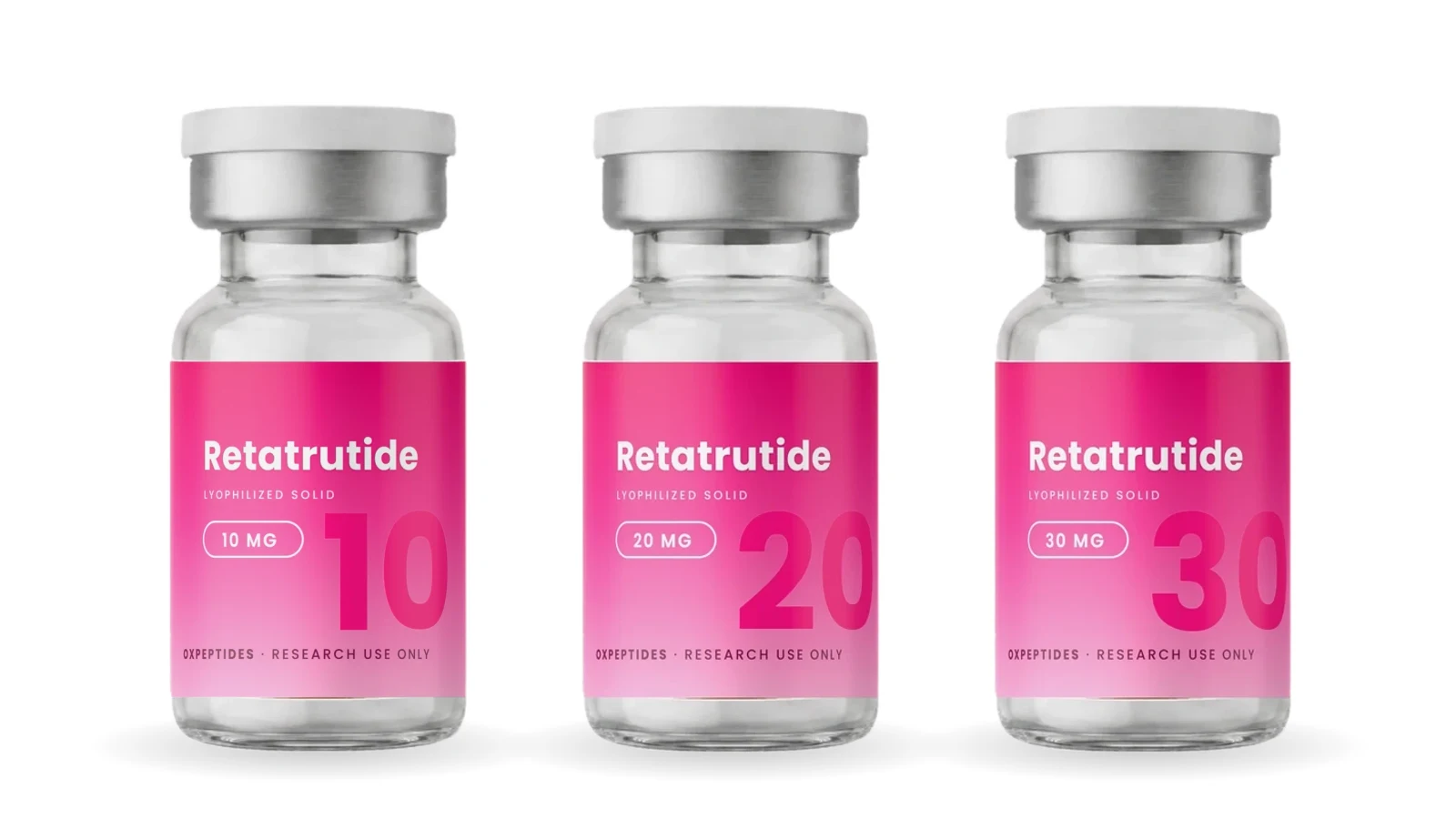
OXpeptides (https://oxpeptides.com) is one example of a vendor that publishes an third-party laboratory certificate per batch and keeps the research-use frame; the same two questions from the COA article apply to it as to anyone.
Questions readers ask
What does research use only mean on a retatrutide vial?
That the product is sold as a laboratory chemical for in vitro and animal research, not as a drug, and that the seller claims nothing about safety or effect in people. The label is the legal basis of the sale, and the buyer accepts it on purchase.
Is research-grade retatrutide the same as the drug in trials?
The molecule is the same. The material is not: trial retatrutide is GMP-manufactured with full release testing on every batch; a research vial has only the vendor's certificate of analysis behind it.
Can a research vendor give dosing advice?
No. Giving dosing advice would establish intended human use and contradict the research-use label. A vendor that does so has undermined its own legal position.
Is retatrutide approved for human use anywhere?
No. As of September 2026 it is not approved by the FDA, the EMA or any other regulator. It is available to patients only through Lilly clinical trials and the single-patient expanded access program listed as NCT07629401.